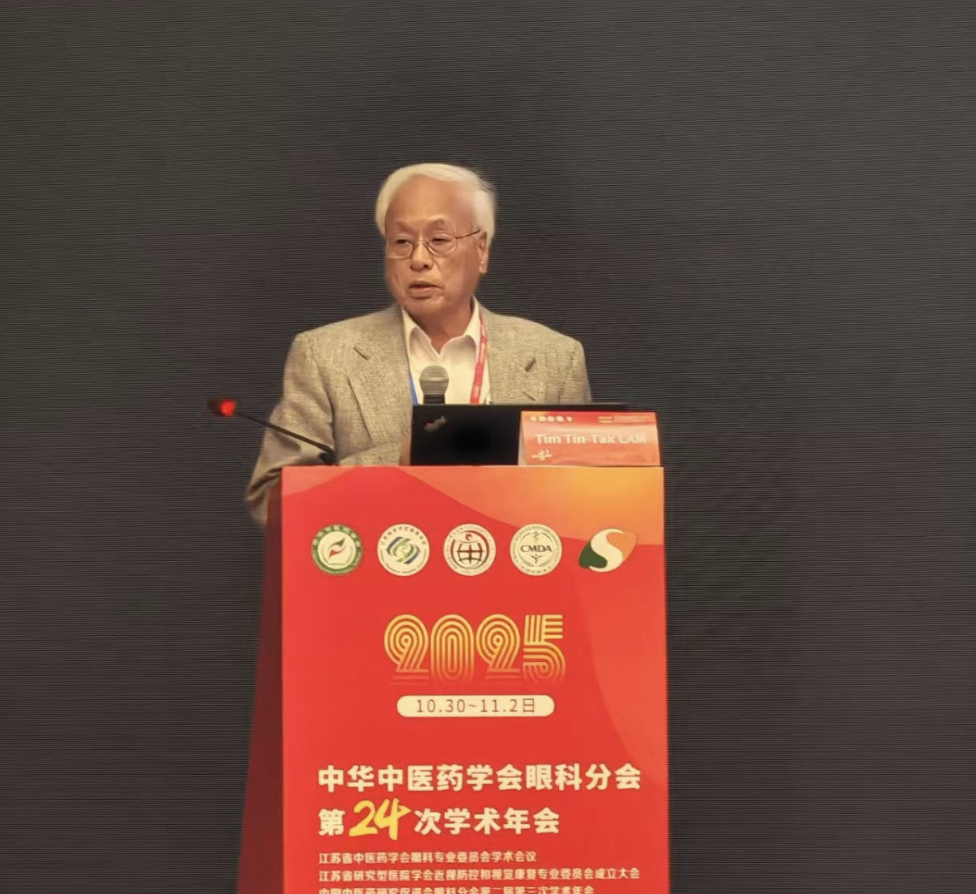
Tim Lam
When Tim was seven years old, he already knew what he wanted to be: a scientist. It wasn’t a passing childhood interest. Even at that age, he understood that becoming a scientist meant pursuing a PhD entering academia. Looking back now, he describes his journey as a reflection of God’s grace - honoring a dream planted in him long before he understood how it would unfold.
“The first part of my career was in academia, and I really enjoyed it,” he says. “Later I was recruited into the pharmaceutical industry, which opened a whole new world.”
Today, after decades of research and leadership, Tim works as an independent consultant. In many ways, it is the season of life he appreciates most. “Some people call this stage ‘flourishing’,” he says with a smile. “These are truly the golden years of my life - something I never expected.”
A Curious Mind that Never Stops Exploring
If Tim received a free plane ticket tomorrow, he wouldn’t hesitate for long. Egypt tops his list. The ancient history fascinates him, but he is also deeply curious about how knowledge and information have been preserved and transmitted across generations. His interest also extends to the Coptic Christian tradition, one of the oldest expressions of Christianity.
“I’m fascinated by how people translate and pass on information,” he explains. “And there are still questions in history that intrigue me - like the period after Jesus’ resurrection when He remained for forty days. Later writings add details we don’t often talk about.”
Russia and China are also on his list. His wife hopes to see the norther lights in Russia, while China’s dramatic landscapes and rich culture continue to draw their curiosity.
But while travel excites him, Tim also knows the importance of slowing down.
Learning to Refuel
“For anyone who wants to care for others, refueling is essential,” Tim says. “Otherwise we eventually run out of the ability to love well.”
For him, recharging happens in several ways. One is through long-standing friendships - like a friend he has spoken with every other week for nearly 40 years. Another is quiet reflection.
“I’m an introvert,” he admits. “So I need time to think.”
His garden also plays an important role. The simple act of tending plants reminds him that growth takes patience, care, and time - lessons that carry directly into mentoring.
Why Mentoring Matters
Watching people grow is what Tim enjoys most about mentoring.
“Growth is mysterious,” he says. “But seeing a person develop, especially through challenges, is one of the most spectacular things a mentor can experience.”
Tim came to NExus MEntoring after years of informal mentoring throughout his career. What drew him in was the thoughtful framework.
“I appreciated that Nexus has a systematic approach [to mentoring],” he explains. “After going through the training and reading materials, I saw how much effort had gone into creating tools for mentors.”
Tools like IPSAT, the identity profile and coaching provide structure and insight, helping mentors guide others toward flourishing. Combined with strong support and the unconventional model of group mentoring, Tim believes Nexus offers something unique.
“[Nexus] gives mentors practical ways to help people grow.”
A Moment of Uncertainty
Even accomplished scientists face moments of doubt. During his PhD research, Tim was assigned a project that no one else in his lab was working on.
“I felt completely alone, “ he remembers. “I kept wondering, ‘What am I supposed to do?’ “
His mentor reassured him that although he would be working independently, he would not truly be alone. The mentor then connected Tim with a leading expert in the field.
“Within 15 minutes of talking, the scientist gave me a vial of cells I needed for my research,” Tim says. “It was incredibly generosity.”
The moment reinforced an important lesson: mentorship often opens doors that talent alone cannot.
Rethinking Career Advice
One piece of popular advice Tim questions is the phrase: “Follow your dreams.”
“There’s nothing wrong with dreaming,” he says. “But sometimes people ignore important factors.”
Personality, skills, passions, and real-life circumstances all influence whether a dream is sustainable. Without alignment, pursuing a dream can lead to frustration rather than fulfillment. Instead, Tim encourages young adults to thoughtfully evaluate all these factors.
“Dreams matter,” he says. “But wisdom helps us understand how to purse them well.”
The Mentors Who Changes His Life
Tim’s life has been shaped by many mentors, starting when he was a child. As a fourth grader, he often found himself in trouble. One day, after a disciplinary incident, his teacher did something unexpected.
“He took me to his house, sat me down, gave me a snacks, and talked to me,” Tim recalls. He said, “He said, ‘Tim, ou can’t continue like this.’”
It was the first time someone had spoken to him with such care and concern.
“I remember crying as I walked home,” he says. “I wondered what I had done to deserve someone caring about me like that.”
Throughout his academic career, professors and advisors continued investing in him, reminding him of his potential and pushing him forward. His PhD advisor once told him, “My role is like a surrogate parent.”
Another mentor, during his postdoctoral work, taught him that “every word counts.”
Even his first manager in industry offered surprising wisdom: “ Many people pay us to make mistakes.” Tim laughs recalling it, but the message was clear: mistakes are part of learning and innovation.
When Mentees Become Teachers
Mentoring has also taught Tim humility. Over the years, many mentees have returned to tell him how much of his guidance meant to them, often in ways he never intended.
“That reminds me that authenticity matters,” he says. “People are watching who you are, not just what you say.”
Even his own children have shaped his perspective. Once, his son told him he had been “living in a bubble. Another time, his daughter asked a simple but powerful question: “Does my happiness count?”
“These moments were reality checks,” Tim admits. “They reminded me to listen more and understand others better.”
A Failure That Changed Everything
One of Tim’s most formative experiences came during his PhD program. His original plan had been straightforward: earn his doctorate in the US and return to Hong Kong to become a professor at a new pharmacy school. But the journey did not go as expected.
“My PhD took much longer than others,” he says. “At one point, an experiment I did turned out to be a false result. I felt like a complete failure.”
The experience plunged him into deep frustration and discouragement.
“I felt like a cave animal with no way out,” he remembers. Yet in hindsight, he sees it differently.
“That period taught me humility and helplessness,” he says. “And because of that, I can now empathize with people who are struggling.”
The hardship ultimately shaped his ability to mentor others through their own difficult seasons.
A Message to His Younger Self
If Tim could speak to his 21-year-old self for just one minute, his message would be simple:
“Think about life in the long term. Take good care of yourself. And always do the right thing.” Then he pauses. “And I would give him a hug,” he adds. It's the same message he now gives his own children.
Daily Habits That Ground Him
One habit has anchored Tim’s life for nearly 5 decades: time with Scripture.
“I started in 1976,” he says. “For almost 50 years I’ve spent time reading the Bible and journaling [every day].”
He also encourages students to practice gratitude: first thing in the morning and again before going to bed.
“It changes how you see life,” he says.
A Vision for Mentoring
Tim hopes mentoring continues to grow as a movement.
“I don’t think the vision of mentoring is new,” he says. “But it’s something we need to embrace more intentionally.”
Organizations like Nexus, he believes, can play an important role in strengthening that culture.
“Nexus is still young and may not be perfect,” He says. “But I hope more people will invest in it and help it become a stronger movement.”
Because in the end, the question he asks his students is the same one that guides his own life: “What do you really want in life?”
Once you know the answer, he says, the next step is finding the tools and the people who will help you grow into it.